The Power Picks: Which Secondary Metabolites and Why?
- BioPrime Stories & latest news

- The Power Picks: Which Secondary Metabolites and Why?
The Power Picks: Which Secondary Metabolites and Why?
Plants are not as simple as they look. Behind every green leaf, there is a powerful system working silently to protect, heal, and adapt. One of the most important parts of this system is secondary metabolites, natural compounds that help plants survive in the real world. Over 200,000 compounds have been identified so far, with plants investing up to 40% of their fixed carbon into producing them.
Unlike basic nutrients needed for growth, these compounds are not essential for plant life. But they play a critical role in protecting plants from pests, diseases, and environmental stress like UV radiation and competition.
At Bioprime, understanding these “power picks” is key to building smarter, more effective biological solutions for agriculture and sustainability.
What Are Secondary Metabolites?
In simple terms, secondary metabolites are special chemicals made by plants for defense and interaction with their environment. They are also the reason many plants have medicinal, aromatic, or protective properties.
These compounds are widely used by humans in medicines, agriculture, and even food industries. But not all metabolites are equal. Some stand out because of their strong impact and these are the ones that matter most.
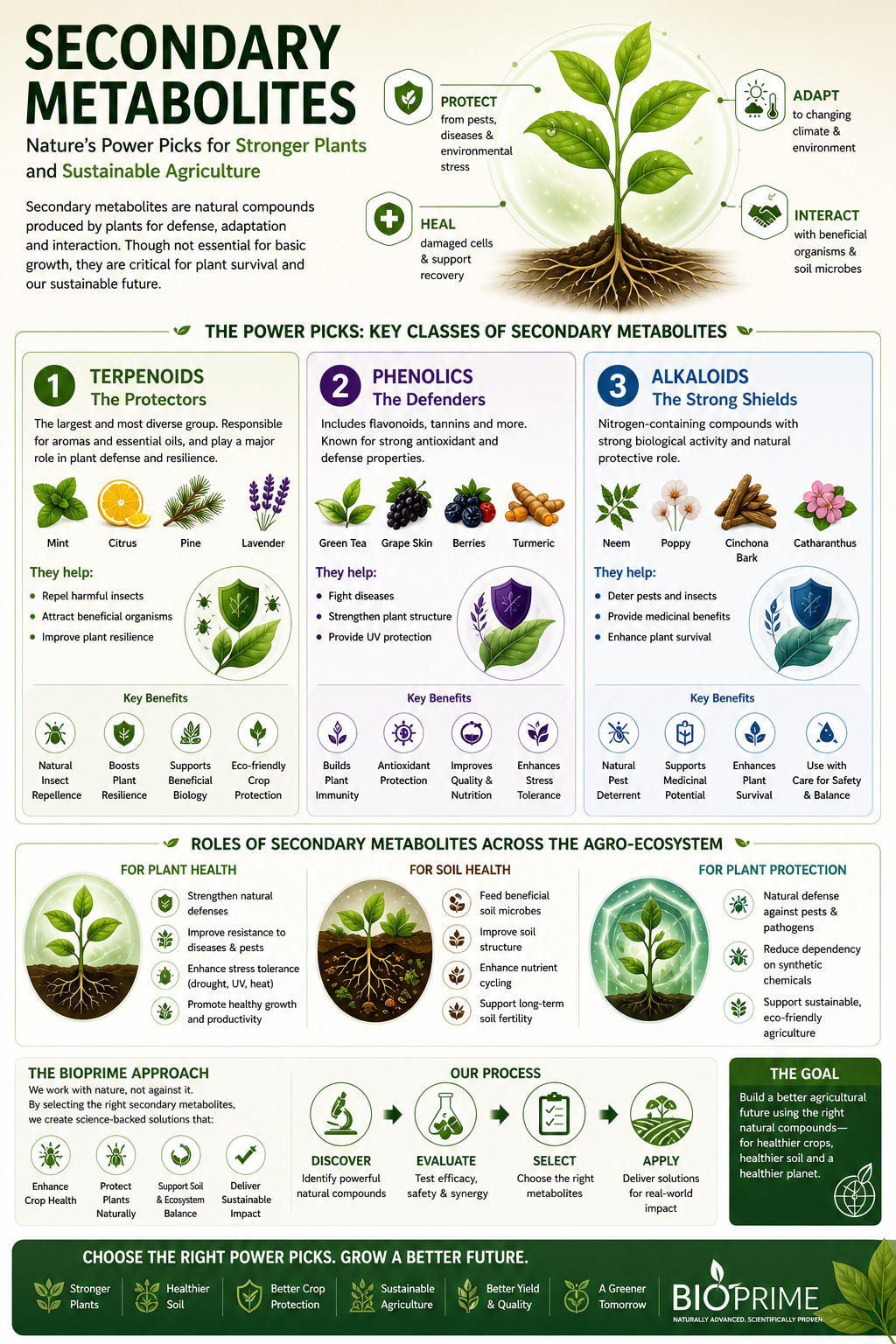
The Power Picks: Key Types of Secondary Metabolites
1. Terpenoids – The Protectors
Terpenoids are the largest group of secondary metabolites. They are responsible for the smell of plants like mint or citrus and play a major role in plant defense.
They help in
● Repel harmful insects
● Attract beneficial organisms
● Improve plant resilience
● Enabling communication via vocs (volatile organic compounds),
● Aiding growth through hormone regulation.
These compounds are built from simple carbon units and are highly versatile. There are several types of Terpenoids like Monoterpenes, Sesquiterpenes, Triterpenes, Tetraterpenes.
Terpenoids are powerful natural protectants, making them ideal for eco-friendly crop protection solutions.
2. Phenolics – The Defenders
Phenolic compounds include flavonoids and tannins. They are known for their strong antioxidant properties and ability to protect plants from pathogens.
They help in :
● Provide structural integrity (lignin),
● Pigment for attracting pollinators,
● Antioxidant protection to neutralize ROS.
● Mediating plant responses to stress (drought, UV, cold, pathogens) by strengthening tissues
● Acting as signal molecules
● Provide UV protection
Phenolics are also responsible for color, taste, and many health benefits in plants. Their antioxidant and defense properties make them essential for building plant immunity naturally.
Common Synonyms and Types of Plant Phenolics are Polyphenols, .Phenylpropanoids, FlavonoidsPhenolic Acids with s ubclasses like anthocyanins (pigments) and anthocyanidins, Stilbenesetc
3. Alkaloids – The Strong Shields
Alkaloids are nitrogen-containing compounds known for their strong biological activity. Many of them act as natural toxins to protect plants from herbivores.
They help:
● Defend plants by deterring or poisoning herbivores and pathogens.
● Act as a reservoir of Nitrogen for plants.
● Growth Regulation: Some alkaloid structures act as natural regulators of plant growth.
● Competition (Allelopathy)inhibit the growth of surrounding plants.
● Pollinator Attraction
These compounds have been used in traditional medicine for thousands of years. Alkaloids are powerful, so they must be selected and applied thoughtfully to balance effectiveness and safety.Common Examples of Plant Alkaloids are Nicotine, Morphine, Caffeine, Atropine , Quinineetc
4. Glucosinolates – The chemical defense
They act primarily as a chemical defense system against herbivores and pathogens.Upon tissue damage, they react with the enzymes to create toxic hydrolysis productsthat repel pests and combat fungal/bacterial infections
5. Saponins and Glycocides – The barriers
These specialized metabolites having bitter taste and foaming characteristics. Saponins protect plants from fungal pathogens, bacteria, and insects, acting as pre-formed barriers. They are divided into two main types: steroidal saponins and triterpenoidal saponins.
Why These Metabolites Matter
Secondary metabolites are not just plant chemicals, they are nature’s strategy tools. acting as "secret weapons" for defense against pests, diseases, and environmental stressors. They also facilitate ecological interactions, including attracting pollinators and inhibiting competing plantsWithout them, plants would struggle to survive in changing environments.
They:
● .Defense Against Biotic Stress
● Protect against herbivores by deterring feeding
● Reduce pathogen spread (bacteria, fungi, viruses) via antimicrobial properties.
● Abiotic Stress Tolerance including drought, high temperature, freezing, and heavy metal stress
● Play a vital role Signaling and Communication. They act as signals to attract pollinators (bees, butterflies) and beneficial insects, while also communicating with other plants and microbes.
● Define plants ecological Interaction (Allelopathy) by eliminating competitor plants
● At Bio Prime, the focus is not just on using these metabolites—but on choosing the right ones. Because the real power lies in selecting compounds that work efficiently, safely, and sustainably.
The Bioprime Approach
Bio Prime believes in working with nature, not against it. By identifying and using the most effective secondary metabolites, the brand creates solutions that:
● Enhance crop health
● Protect plants naturally
● Support long-term soil and ecosystem balance
The goal is simple: use science-backed natural compounds to build a better agricultural future.
Conclusion
Not all secondary metabolites are created equal. Some are stronger, smarter, and more effective and these are the true “power picks.”
By focusing on key groups like terpenoids, phenolics, and alkaloids,Bio Prime is unlocking the hidden potential of plants. The result is a smarter, more sustainable way to grow and protect crops. Because when you choose the right metabolites, you don’t just grow plants, you grow possibilities.